Downtown LA, 2012
Dear friend,
I love traveling. Traveling has helped me open my eyes and my
perspective to the world. Traveling has helped me make tons of new
friends all around the globe, better understand other cultures, and to
also give me a chance to reflect on my personal values. If I started
traveling all over again, these are the tips I would give myself.
Disclaimer
First of all, there is no “right” or “wrong” way to travel. Everyone will need to discover what works for themselves.
All advice is autobiographical. Many of these travel tips are
counter-intuitive— that took me years of traveling (around a decade)
before I could figure it out.
Furthermore, I am constantly learning and evolving in terms of how I approach my travel philosophy.
So just take these list of tips as a source of inspiration, and to spark your own thinking.
Table of contents
When in doubt, leave it at home
Don’t bring more than one camera and one lens
Why are you traveling?
Always optimize for lightness
Don’t complain
Don’t expect any epiphanies
Don’t expect to make any good photos
Photograph like a local
Don’t always be shooting
Meet with local photographers
Learn a few basic phrases
Spend less time on technology
Either have really cheap meals, or very expensive meals
You will only remember the high-points and the end of a trip
Try to make yourself uncomfortable
How to overcome jetlag
Don’t be a tourist
Don’t plan further than a day ahead
Shop at a local grocery store
Travel locally before internationally
Stick to one backpack
Who you travel with is more important than where you travel to
Where are good places to shoot?
“Will I look at this photo again?”
Know when not to make a photograph
1. When in doubt, leave it at home
London, 2013
My biggest problem in traveling is carrying too much stuff. All of
this stems from the question, “What if?” It is a sense of fear that
makes us over-pack.
One thing I didn’t realize before I started to travel was this: Almost everything you can buy at home, you can buy abroad.
If you are looking at something you’re not sure whether to bring or not, leave it at home.
2. Don’t bring more than one camera and one lens
Istanbul, 2014
One of my dreams when I was in college was to backpack through
Europe. Through the help of Cindy, I was able to make that trip happen. I
took out a $5,000 loan from my school, booked my flights, hostels, and
planned my itinerary for Europe:
Fly into Paris
5 days in Paris
2 days in Rome
2 days in Florence
2 days in Venice
4 days in Prague
5 days in London
Fly out of London
For the trip, I brought a Canon 5D (original), a 35mm f/2 lens, and 24mm f/2.8 lens.
I made a few photos I was happy with in my trip, but my biggest
regret was bringing such a big, heavy, bulky camera, and more than 1
lens.
99% of my photos were shot on the 35mm f/2 lens, and I barely touched
my 24mm f/2.8 lens (shot a few wide-angle shots inside cathedrals, but
that is pretty much it — and I ended up never looking at the photos
again).
The advice I would give myself is to pack the smallest, lightest,
most compact camera possible — and to only stick with one lens.
The beauty of traveling with one camera, one lens (preferably with a
camera that is small, compact, and lightweight) is that you will enjoy
your travels more. Traveling can be exhausting, and the more gear you
have with you, the more weight you have, the more miserable you will be.
As a traveling photographer, you want to be as light as possible. The
lighter your gear, your backpack, and your equipment— the further you
can walk, with less fatigue, which will help you have more energy to
actually make photos in the first place.
3. Why are you traveling?
Istanbul, 2014
One of the other questions you should ask yourself before traveling is this: “Why do I want to travel?”
For me, I wanted to make beautiful photographs. I was going to school
at UCLA at the time, and I was bored with LA. I thought that
backpacking through Europe would help me finally make the beautiful
photographs I wanted.
However after my trip, I was massively disappointed. I took a few
photos I was happy with, but honestly — I didn’t make the National
Geographic-esque photos I wanted. I realized that most of the photos I
shot in LA were actually more interesting than the photos I shot in
Europe. Most of the photos I shot while traveling were touristy photos —
photos I could easily find on Google Images or online.
As a photographer, I feel like your reason for traveling shouldn’t be
to make nice photos. Rather, think of traveling a way to see and
explore new cultures, meet new people, and step outside of your comfort
zone.
Photography should be a second priority.
4. Always optimize for lightness
Prague, 2015
When I first started traveling, I brought far too many things. I
brought extra shoes, extra pants, extra shirts, extra socks, underwear,
extra hard drives, extra lenses, extra equipment, extra batteries, and
all these extra things which were unnecessary.
At the moment, here is my current list of things to travel with:
Backpack
Camera
Laptop
Smartphone
2 pairs of clothes (all quick-dry, made out of polyester, includes my shirt, boxers, socks)
1 pair of pants
1 pair of shoes
I’ve almost made a game out of it — I wonder to myself, “How little can I travel with?”
The lighter I travel, the more fun I have while traveling. I have
also found that whatever I have thought is “essential” — really isn’t.
Actually one of the points of traveling should to be a little uncomfortable. Don’t optimize for comfort.
Traveling should help rattle our bones a little. To realize that all
these materialistic things we have back home isn’t necessary.
Traveling has also helped me realize that having more stuff is a
burden. And this is a philosophy we can all apply to every aspect of our
lives.
When we travel we can’t take our car with us, our house, our
thousands of possessions, etc. Traveling helps humble us, and realize
how little we actually need to be happy.
5. Don’t complain
New Orleans, 2015
When you travel, things will always be different. They will never be the same as they are back home.
It is easy to travel for the first time and just complain how
everything is so different, and how other people are so “backwards.”
However reality is all about your perspective. If you find something
negative that you don’t like to complain about — you will make yourself
more miserable.
Rather, my suggestion is this: don’t complain. At all. Not even a little bit.
What I have discovered while traveling is that every culture is different. No culture is “better” or “worse.”
In Vietnam, they run on “rubber-band time” (most people are around
10-30 minutes late for appointments). In Japan, you can set your watch
based on the time-table of the train schedule. Who is right? Who is
wrong? Nobody. It is just different.
So don’t expect things to be as you like them back home. If anything,
embrace how different things are. This gives you an opportunity to step
outside of your comfort zone, and realize that other people operate
differently in the world.
It has also helped me realize that cultural differences are all
socially-constructed. The social “rules” that we have back home are
often arbitrary, and only specific to us.
Throw away all the social rules, start from a blank slate, and be
grateful for all the differences you encounter while you travel. After
all, isn’t that the point of traveling?
6. Don’t expect any epiphanies
Prague, 2015
Before I traveled, I was quite unhappy with my life. I didn’t really
like where I lived, I felt like my photography was being limited by my
geographical location, and I felt that happiness and beauty was located
somewhere else— somewhere possibly in Europe.
But after traveling through Europe for around a month, I realized—
things in Europe were much more similar to back home than I expected.
While the place and people were a bit different, they were much more
similar than dissimilar.
I came back home without any big “aha” moments or epiphanies. Rather,
I realized how simple the world was. None of my dissatisfaction from
back home was cured through traveling. Only through studying tons of
Zen/Stoic/Taoist philosophy — I was able to find more happiness and
tranquility in my life.
If you travel and expect to find some sort of “enlightenment” — you
will be massively disappointed. Because when you travel, you are just
changing your environment. You can never escape yourself and your own
mindset.
Happiness comes from within— from our perspective of the world. We
can easily find happiness by finding gratitude in the small things in
life.
And I feel that is what photography is all about — finding gratitude
in the small beauties of life. The beauty of an old couple holding
hands. The simple joy of having a cup of coffee at a cafe. The simple
chatter of people on the streets, a nice sunset, or meeting interesting
people.
So when you’re traveling — do it as a way to explore the world, see
how the rest of the world works, and runs. Use your time traveling to
introspect. But don’t expect any epiphanies or miracles.
7. Don’t expect to make any good photos
New Orleans, 2015
Before I started to travel, I day-dreamed how I would be able to make
all these incredible photographs. I imagined taking these epic photos
in Paris, in the quaint alley-ways, and these gorgeous photos of the
architecture there.
Honestly, I probably only made 2 good photos through my entire month of traveling.
The problem of traveling internationally (especially in foreign
countries) is that we have pre-conceived notions of what “beauty” is. We
have these images of Steve McCurry and National Geographic in our
heads. We imagine “exotic” countries as still be “untouched” by
civilization — where people live in harmony, in simple lives. But
honestly, the rest of the world has movie theaters, iPhones, Starbucks,
and other modern conveniences. Don’t expect to make good photographs,
that will blow your mind.
8. Photograph like a local
New Orleans, 2015
My suggestion instead is to try to approach photographing while you’re traveling like a local.
For example, I’m currently here in Hanoi, Vietnam. Before I came
here, I imagined people just in rice-patty hats, bicycles, and all the
other touristy concepts. I knew I didn’t want to make those types of
photographs — so I started to explore and see what other Hanoi-based
photographers were shooting.
I came across the work of Chu Viet Ha — who made non-cliche street
photographs of Hanoi. He photographed it like it were just any other
place in the world, not focused on visual cliches like rice-patty hats
or bicycles.
So whenever I travel now — I ask myself, “How would a local
photograph this place?” I try to avoid what I conceive might be a visual
cliche in a place. I try to see the place I am traveling to from the
perspective of someone who has lived there for a long time.
This is a good strategy to help you make more interesting images.
9. Don’t always be shooting
Tokyo, 2014
Another common mistake I made when I first started traveling was to
take as many photos as humanly possible. I walked around for 12 hours a
day, only trying to make good photographs.
This made me miserable. Rather than enjoying a leisurely pace for my
travels, I was frantic. Knowing that I only had 2 days in a place, I
wanted to make photos that I hoped would get tons of “likes” on social
media.
Know how to enjoy your travels by not always shooting. Rather, take breaks. Step inside a coffee shop, read a book, and converse with the locals.
Think of yourself as a non-hurried “flaneur” — someone who walks at a
slow pace, without a pre-determined destination. Wander, slowly, and
enjoy the sights along the way.
The irony is that the less pressure I put on myself to make interesting photos while I travel, the better photos I make.
Whenever I put pressure on myself to make good photos while traveling, I never make them.
Enjoy the process of traveling, not just the photo-taking part of it.
10. Meet with local photographers
Tokyo, 2011
Through my years of traveling, I never remember the local sights, the
landmarks, or even taking photos. I remember the local people I meet.
And many of these people I have made through traveling, I still keep in
touch with.
My practical suggestion when you’re traveling somewhere: contact a
local photographer, and see if they want to meet up for a cup of coffee
and shoot.
Most photographers in their own cities are quite lonely. And most
photographers love to show off their own city. So contact another
photographer by finding them on Google, or on social media. Send them a
message, and compliment them on their work.
The great thing about spending time with local photographers is that
they will show you places “off the beaten path” — instead of just going
to the local touristy landmarks.
Furthermore, my favorite part of meeting local photographers (or
people) is to “eat where the locals eat.” While there is no such thing
as an “authentic” experience while you’re traveling— there are certainly
less-touristy places you can enjoy. The food is often cheaper, more
delicious, and it feels more comfortable. Avoid Tripadvisor for food
recommendations— always try to ask the locals for their recommendations.
11. Learn a few basic phrases
Hanoi, 2014
Sometimes when we’re traveling, we want to pick up some new phrases
in French, Mandarin, or Arabic— but we’re nervous of making a fool out
of ourselves.
However when you’re traveling, try to learn a few basic phrases. Trust me, locals will love the fact that you’re trying to learn their local language, rather than insult you.
Always some phrases which are handy to learn:
How are you doing?
Where is the bathroom?
This tastes so delicious!
Can I have a cup of (coffee, tea, water) please?
Can I have a (beer, wine, shot of vodka) please?
What do you like to do here for fun?
Thank you!
Hello/goodbye
You look so beautiful/handsome!
Try to master the basic small-talk topics. Honestly with 10-15
phrases, you can probably cover 90% of conversations you will have with
strangers.
Another important phrase to learn in a local language: “How do I say
[x] in [local language]”? This will help you quickly pick up words. Or
you can also learn by pointing and asking, “What is that?” And learn the
local language how a child would learn it.
12. Spend less time on technology
Saigon, 2014
I would recommend while you’re traveling, try to spend as little time
on the internet, on social media, and with technology as possible.
Don’t buy a local-SIM card with internet for your phone. Don’t enable international data.
Live in airplane mode.
Learn to enjoy the peace and silence that comes while traveling. The fact that people cannot contact you will give you a peace of mind. It will help you clear your mind, reflect, and meditate more while you’re traveling.
Don’t be afraid — most places have wifi (almost anywhere in the
world). So if you really need the internet for something, you’ll be able
to access it.
But try to use your time traveling to fast from the internet. Use
this time to read that book you’ve always wanted to read. Use this time
to write some reflections. Write in your journal. Take photos without
interruption.
Furthermore, I suggest not to upload photos while you’re
traveling. Try to let your photos “marinate” on your camera or hard
drive, until you go home. Then look at your photos after your travels,
and you will be able to re-live your experiences. And the less you’re
worried about constantly sharing everything that you’re doing on social
media, the more present you can be while traveling.
13. Either have really cheap meals, or very expensive meals
Berlin, 2015
The philosopher Nassim Taleb has a method called the “barbell method”
— embracing two extremes of something, and avoiding the middle.
I recommend trying to “barbell” your meals. Only eat very cheap food
(street food) or very expensive places (fancy restaurants). Avoid the
“middle-tier” restaurants (usually most of the places you find on online
tourist recommendations).
Why do I recommend embracing both extremes?
You’re not going to really remember a “so-so/average” meal. You will
build better memories by eating with locals on the streets (very cheap
meals) or in very high-end fancy restaurants.
This is what Cindy and I did when we were broke college students. For
90% of our meals, we just ate the cheapest things we could find on the
street. But for 10% of our meals, we would eat the best places we could
find — and still 10 years later, we remember eating ramen for 1 euro,
and fancy duck with orange-glaze sauce (that was expensive).
14. You will only remember the high-points and the end of a trip
Hanoi, 2014
One of the lessons I’ve learned from psychologist Daniel Kenhamen
(from his book ‘Thinking Fast, and Slow’) is that with the human mind,
we only remember the high-points (most intense experiences) and the end
of a trip.
Furthermore, there is also something called “duration neglect” —
where the duration of a trip isn’t important in terms of building
significant memories.
So if you really want to remember things from your trip, consider the following:
You don’t necessarily need to have a longer trip to have a better trip
Make sure to have the most memorable experiences at the end of a
trip (book an expensive hotel for the last night in a place, or have
your expensive meal at the end of your trip)
Also if you’re traveling, and currently not having a good time — just
remind yourself to try to end the trip on a high note. This way you
will better internalize positive memories from your trip.
15. Try to make yourself uncomfortable
Bien Hoa, 2014
I actually feel the best part of traveling is to live in
uncomfortable situations. This might mean staying at a noisy hostel full
of drunk foreign students, and not sleeping well. This might mean
crashing on the couch of a friend (not sleeping in the comfort of your
own bed). This might mean not having all of the clothes you normally
have back home.
This is the beauty of traveling — try to travel in “simulated
poverty.” Even for a few days, try to subsist on the cheapest meals you
can. Then you will discover how little you really need in life to be
happy (and to survive).
So whenever you’re traveling and things get uncomfortable, relish in
it. Being in uncomfortable situations is what makes hiking, backpacking,
and camping so enjoyable.
Treat traveling the same way. Discomfort is what makes us enjoy our
trip, and suffering will later make better stories and memories. And
when you finally go back home, you will appreciate home even more.
16. How to overcome jetlag
Tokyo, 2012
Jet lag is horrible. Here are some tips I have learned through my travels to minimize the effects of jetlag:
Fast for 24 hours before arriving at your target destination:
Our body’s internal clock or “circadian rhythm” runs on two things:
eating patterns and light. If you want to be less jet lagged, don’t eat
anything (fast) for 24 hours before you arrive at your target
destination. Then eat breakfast at the time you normally do. Not eating
for 24 hours can be a little painful, but trust me — the pain of jetlag
is 10x worse than a little stomach-discomfort.
Drink caffeine during the day: Drink your
caffeinated beverage of choice when you arrive at your target
destination during the day. For me that is a lot of coffee. Others, that
is tea.
Take melatonin at night if you can’t sleep: Before
traveling internationally, I recommend picking up a bottle of melatonin —
a natural hormone that helps promote sleep. No, it isn’t like some
intense prescription drug that can become addictive. I recommend taking
anywhere between 1-5mg if you can’t fall asleep at night. I don’t find
it habit-forming, as long as you don’t take it for longer than 2 weeks
in a row.
Limit your naps: It is easy to take a nap, fall
asleep for 5 hours, and totally screw up your schedule. Limit your naps
to 20 minutes, and once you wake up, have some caffeine to power you
through the day.
Eat a big meal at night: Nothing worse than going
to sleep hungry. After a long day while on the road, reward yourself
with a satisfying meal. Eat enough to be satisfied, but not too much
that you feel horrible.
Limit alcohol: Alcohol impairs our sleep. For some
of us, alcohol helps us fall asleep — but it ruins our sleep cycles. So
limit alcohol if you don’t want to suffer as much jet lag.
17. Don’t be a tourist
Istanbul, 2014
If you really want to have a memorable trip, avoid tours above all else.
Tours take you along a pre-determined route, with no chance of discovery, exploration, and serendipity.
My fondest moments while traveling was to wander aimlessly, following
my nose. To settle into coffee shops that looked interesting, and going
to restaurants which had a lot of locals inside. That meant avoiding
recommendation websites (like Trip Advisor) and instead asking locals,
“What is a good place to eat around here?”
Another tip that will help you be more like a local: don’t ask others
“What is a popular place to eat?” (this is a horrible question, because
they will tell you where the tourists go). Instead, say “Where do you like to eat around here?” By focusing on the question: “You” — they will give you their personal recommendation. This is often a lot more useful.
And when you’re in the restaurant, don’t ask “What is popular here”? Ask, “What is your
favorite dish on the menu?” They’ve probably sampled everything in the
menu, and will probably recommend a meal which is slightly cheaper (but
probably more delicious).
18. Don’t plan further than a day ahead
Saigon, 2014
Another practical tip: when you’re traveling, don’t plan more than a day ahead.
You never know what you might discover when you’re traveling. You
might bump into another traveler who can recommend you plans. You might
meet a local who wants to take you around. You might end up in a certain
location, and hate it.
Don’t plan for more than a day ahead. Have “optionality” — the
freedom to choose different options, the freedom to be flexible, and the
freedom to embrace spontaneity.
Don’t stick to a plan. By sticking to a plan, you become blind to options which might be better for you.
19. Shop at a local grocery store
Downtown LA, 2013
Strangely enough, one of my favorite activities while traveling abroad is to go to a local grocery store or supermarket.
First of all, you can pick up some cheap food or ready-to-eat meals
there. Secondly, you see how locals shop. Thirdly, I feel that grocery
stores or supermarkets are a good reflection of a local culture.
For example, I’ve found it far more fun and interesting to shop at a
grocery store in Paris, rather than to see the Eiffel tower. And nothing
more fun than going to the grocery store and picking up some yogurt,
cheese, and wine— and enjoying a small little picnic in a park, rather
than eat at a fancy Parisian restaurant.
20. Travel locally before internationally
Huntington Beach, 2015
Another thing I wish I knew before traveling: try to travel as much locally before you travel internationally.
Before I started to travel extensively, I always dreamed of going
abroad to Europe and Asia. I forgot how many interesting places there
were to travel in America.
Some American cities which I found far more interesting and enjoyable than abroad:
New Orleans
Chicago
Portland
Seattle
Provincetown
So as a recommendation, try to travel as much as you can locally
before you buy an expensive plane ticket abroad. You can just go for day
trips in your car, in the metro, or via the train. Try to explore a
little out of your own city, or take a short domestic flight.
The benefit of traveling locally is that it is cheaper, you spend
less time in-transit, and you get to know your own country better.
Why is it that we always try to travel internationally before
locally? We imagine international places as more interesting as local
places. But once again, I have found through my experiences that some
local places are more interesting than international places.
So before you travel internationally, see how you can maximize your
traveling experiences close to home. You will still see new sights, eat
new foods, and experience slightly different cultures.
21. Stick to one backpack
Prague, 2015
Another practical traveling tip: stick to one backpack for a trip.
And no, you don’t need one of those huge “backpacker” backpacks that can fit a tent and a sleeping bag.
A simple school backpack works.
Regardless if you’re a man or a woman, you don’t need more than 2
changes of clothes. My suggestion: buy quick-dry clothes that are not
made out of cotton (polyester or other quick-dry materials are
preferable), and wash your clothes every night in the sink or shower
with shampoo or soap, wrap your clothes in towels, stomp them, and hang
them to dry. Usually they’re dry by the morning. Even if they’re a bit
damp, you can still wear them (you won’t die).
This will reduce 90% of your traveling weight and bulk. Furthermore, I
recommend wearing all-black everything (black shirt, black pants, black
undergarments, black socks, black shoes) — even if the area might be
hot. Why? Black covers stains (in case you get dirty), and people don’t
notice that you’re wearing the same outfit everyday (if you wear black).
In terms of brands, I recommend North Face Backpacks. And for
clothing, I recommend ExOfficio undergarments, and the quick-dry and
thin “Airism” line from UNIQLO.
The beauty of sticking with one backpack is that it is a “creative
constraint” — if you can only bring one backpack, you are forced to
travel lighter. And you really question yourself, “Do I really need
this?” before traveling.
The benefit of just having one backpack is also that you don’t need
to check in anything at the airport. Less time waiting in line. The
airline won’t lose your stuff. You can move quickly and be nimble.
22. Who you travel with is more important than where you travel to
Lisbon, 2015
I like traveling with other people. It gives me an opportunity to
have new experiences with someone else, and the chance for us to bond
over these new experiences in the future.
Be careful who you travel with. Your traveling partner can either
help you have the best time of your life, or the worst time in your
life.
Travel with a friend who is not fussy, who doesn’t need to be
pampered, and is adventurous. Also find another traveling partner who is
quite independent, but also is similar to you in personality.
If you travel with a friend who loves museums (and you hate them),
you will be miserable. If you have a friend who only likes to stay at
5-star hotels (and you prefer to save money at hostels), you will be
miserable.
Choose your traveling partner wisely — it is more important than where you travel to.
23. Where are good places to shoot?
Lisbon, 2015
As a traveling photographer, who prefers shooting “street photography” — here are some good spots to usually shot:
Downtown shopping areas
By the water
In coffee shops/cafes
In malls
I generally recommend against going to touristy landmarks.
For example when I’m in Paris, I avoid the Eiffel tower like the plague.
Even when I travel to new places, I always ask my hosts or local
friends: “Where do you recommend us not to go?” Or I ask them, “What are some tourist traps to avoid?”
Traveling is all about knowing what to avoid, and things not to see, or things not to do.
This is why I recommend against Googling “What to do in city [x]” —
because the internet will always tell you to do touristy crap.
Also another practical tip is to ask locals, “Where do you like to go
outside of the city for a day trip?” This will help you travel to
places that locals travel to — which tend to be much more interesting to
photograph, and less touristy.
For example, while here in Hanoi, my friend Chu Viet Ha took me and
Cindy to a Vietnamese city 3-hours outside via bus for the mid-autumn
festival. We didn’t see any foreign tourists— only local tourists. And
it was one of the most memorable trips so far, and helped me make some
interesting photos as well.
24. “Will I look at this photo again?”
Marseille, 2013
Another problem we make while we’re traveling as photographer is that we overdocument
our trip. The more photos you take while you’re traveling of mundane
details (like what you’re eating, and of every single landmark) — the
more stress you’re going to have when looking through your photos.
So ask yourself when you’re traveling and making photos: “Will I honestly ever look at this photo again?”
If the answer is “no” — refrain from clicking the shutter.
That doesn’t mean to take a few photos. Rather, take more photos of fewer scenes.
For example, if I see an interesting street scene, I’ll take 50-100
photos of it. But I might only find 3 interesting street scenes in a
day. I now usually make it a practice not to take photos of my
food, or of landmarks that I visit. Because I know that I will never
look at my food photos, or touristy photos again.
Take photos of things which have personal significance to you, spark
joy in your heart, or really excites you. Don’t take photos for the sake
of it.
25. Know when not to make a photograph
Amsterdam, 2015
Which brings us to the last point — know when not to take a photograph, when to put away the camera, and enjoy the moment.
The point of being a photographer isn’t to make great photos. The
point of being a photographer is to enjoy life. Photography should be a
tool that enhances our life experiences, and helps us enjoy day-to-day
living. The point isn’t to try to optimize your life to make the best
photos, to get the most “likes” on social media or to gain more
followers.
Let’s say you’re enjoying a romantic sunset with your partner. Do you
really need to photograph it? Perhaps put away your camera, and breathe
in the air, enjoy the sunset, and relish in the moment. Don’t be like
the parent who tries to over-document his/her child’s sports games (and
doesn’t actually enjoy the game). Or don’t be the person who takes
thousands of photos of fireworks, without actually enjoying the
fireworks.
Conclusion
Seoul, 2009
These 25 tips are a distillation of my last 10 years of traveling on
the road. I hope that you find some inspiration, or
counter-intuitive/contrarian thoughts that help give you a different
perspective.
At the end of the day, I think spending money on traveling is one of
the best investments you can make. Traveling won’t solve your problems
in life — but it will help you stimulate your thinking, help you step
outside of your comfort zone, and challenge your pre-conceived notions.
Don’t seek to be comfortable when traveling. Do things which scare
you. Don’t seek enlightenment when traveling — just enjoy the small
experiences.
Travel with those you love and care about. Don’t worry about seeing
everything when you’re traveling. Spend more time in fewer places. Don’t
be frantic when you’re traveling — travel at a comfortable and
leisurely pace, and enjoy every step of the way.
Don’t try to force your environment to adapt to your needs. Rather,
be flexible. Adapt to the world. Don’t complain. Enjoy every breath, and
realize how blessed and fortunate you are to travel. Most people never
leave within a 10-mile radius of their home. You’re one of the blessed
few.
What personal significance will traveling bring you? There is only
one way — experience it for yourself. Then write your own traveling tips
for your friends, family, and others.
Always,
Eric
Hii All,
sudah lama saya tidak menulis disini, karena saya sudah buat blog baru tulisan saya sendiri jadi saya lebih fokus meng compile tulisan saya untuk blog tersebut.
blog ini adalah hal hal yang saya share dari apa yang saya temui, saya suka, dan saya lihat.
bulan depan, April 2014, saya dan teman saya rencananya akan pergi ke singapore sebagai backpacker.
saya sudah pernah sekali kesana tapi bersama teman kantor yang sudah sering kesana, jadi saya hanya anguk anguk dan ikutin mereka aja :D hahaha
yap.
ini beberapa informasi yang saya kumpulkan, semoga bisa bermanfaat juga buat anda yang mau kesana sendirian / tidak ikut tour apapun.
Tips untuk transportasi di singapore
http://www.travelsingapura.com/category/tip-transportasi-di-singapore/
hal yang paling susah dimengerti / dipahami di kota/negara orang adalah transportasinya, jadi saya tempatkan diurutan yang pertama.
saya sempat tanya sama atasan saya, harga tiket MRT di Singapore berapa, dia bilang sekitar 15 USD untuk beli pertama. dan selanjutanya tinggal di top up saja. satu kartu ini bisa digunakan untuk semua transportasi di Singapore, Bis, Kereta Gantung, MRT, LRT, dll.
semuanya terintegrasi jadi satu.
hal ini mengingatkan bahwa Jakarta / kartu TransJak akan di integrasikan seperti itu, rencananya Trans Jakarta dan Kereta api menggunakan 1 kartu untuk pembayarannya
tapi entah kapan akan terealisasikan XD
Tiket Murah
tiket murah untuk berpergian itu kudu harus wajib pake banget ..hahaha
apalagi tiket murah untuk ke negara ASEAN udah banyak banget dan bersaing banget
www.traveloka.com
www.tiket.com
bisa cari tiket murah disana, bisa juga cari promo promo terbaru kalau langganan / jadi member mereka.
so keep it update :D
Penginpan
penginapan bisa cari dimana aja, ke om google, penginapan murah di singapore.
rata rata penginapan untuk backpacker itu berbentuk mess, kita membayarkan per tempat tidur di lokasi tsb.
kisaran rata rata nya dari Rp. 300,000 - Rp, 600,000 sesuai dengan fasilitas.
referensi saya, cari tempat penginapan yang dekat dengan pusat kota, biar lebih enak jalan jalannya dan akses ketempat yang anda ingin tuju lebih mudah.
www.agoda.com
www.yoursingapore.com
sebenernya sih urutannya mau jalan.
cari tiket - hotel - selanjutnya ngapain baru browsing :D
cari tempat wisata dan transportasinya kesana.
semoga sharing ini bisa membantu buat kamu kamu kamu yang mau jalan jalan nge-bolang hehe
beberapa ref lainnya untuk biaya hidup dan tempat tempat yang bisa dikunjungi
Martabak HAR adalah salah satu makanan kuliner khas palembang , martabak ini terbuat dari gandum dan telur dan dimakan dengan saus (kuah) kari kambing dan kentang dengan irisan cabe. paling manteb dimakan selagi panas. dan dimalam hari. yap benar, ini adalah jajanan khas palembang yang paling enak dimakan di malam hari, kuahnya yang hangat, rasanya yang khas bisa kamu rasakan, dan juga tokonya buka cuma malem/sore (haha)
martabak india? bisa dibilang begitu, karena perintis dan pemilik pertama usaha ini adalah orang muslim india yang bermukim di palembang sejak lama, martabak ini lebih dikenal dengan nama perintisnya, yakni Haji Abdul Rozak, namanya menjadi Brand untuk martabak -- Martabak HAR--
usaha yang dirintis beliau bukan hanya martabak, tetapi martabaklah yang paling melekat dengan namanya.
ada yang bilang, martabak HAR yang asli di tokonya dipasang toko empunya. yang dilanjutkan oleh genarsi penerusnya.
well, di palembang mudah ditemui toko martabak HAR, yang paling saya inget itu ada di deket mesjid agung dan di kedukan.
tetapi bagaimana dengan di jakarta? yah, ini adalah makanan langka di jakarta, kalau pempek udah berhamburan yang jualan mulai dari toko gerobak sampe yang seribuan (fyi : pempek yang ada di jakarta, khususnya yang gerobakan itu rasanya beda jauh dengan pempek gerobakan ato pempek emperan /ecek-ecek di palembang, mungkin karena di sini (jakarta) udah gag pake ikan lagi, disana biasanya diakalin kalau ikan gabus mahal bisa pake ikan yang lain.. :D)
kembali ke judul. sekarang anda yang berada di jakarta bisa mencoba / menikmati hidangan martabak HAR ini, saya sempet dapet infonya dari temen setelah cek tkp dan makan bareng si kawaii baru bisa kasih info ini,
langsung aja gan cek tkp. dari --jalan KH.Wahid Hasyim-- (arah mau ke roxy kalau dari harmoni) inget !! lampu merah ke tiga (lampu merah yang ada pos polisinya=biar gampang) itu belok kiri masuk ke --jalan biak-- jalan pelan pelan aja, ada disebelah kiri sebelah bank mustika lewat dikit. persis pinggir jalan
saya kira waktu itu dy di toko, gag taunya itu di pinggiran jalan, yang jual pake inova silver ada tulisanya Martabak H. Abdul Rozak. tenda kuning yah gan (jangan salah, bukan lagunya desi ratnasari :p)
kemarin saya coba, martabak kari & mie celor + es teh manis 2 = 51k martabaknya sekitar 20-25k gan.
well. silakan langsung dicoba, yang udah kangen silakan dateng, yang belum pernah cobain deh makan bareng pasangan ato keluarga pasti mantep :))
Rekomendasi: martabak HAR, Jl. Biak Roxy, sebelah Bank Mustika di sebrang Apotek Roxy. buka mulai dari jam 17.00~23.00
Kabar baik buat kalian yang suka jalan-jalan dan punya ketertarikan
khusus dengan dunia selebriti: museum lilin terkemuka di dunia, Madame
Tussauds, akan membuka cabang baru di Jakarta pada Juli tahun 2012 ini.
Dengan adanya museum ini, kalian tidak perlu lagi jauh-jauh ke luar
negeri untuk melihat dari dekat patung-patung lilin yang pastinya luar
biasa mirip sama tokoh-tokoh idola kalian.
Rencananya, museum yang namanya diambil dari pematung terkenal Perancis
Marie Tussauds ini bakal dibangun di Ancol Beach City. Tak
tanggung-tanggung, museum lilin yang direncanakan berukuran 3.000 m2
dari 58.000 m2 wilayah Ancol Beach City ini akan menjadi yang terbesar
di kawasan Asia Tenggara.
Mengenai patung yang akan dipajang, pihak Ancol Beach City selaku
pengelola museum mengatakan masih dirahasiakan. Tapi, selain tokoh-tokoh
dunia, museum ini juga akan memajang figur-figur Indonesia.
Museum Madame Tussauds ini tentu akan jadi alternatif tujuan wisata yang
menyenangkan bagi warga Jakarta dan sekitarnya. Kabarnya, di kawasan
museum bakal dilengkapi pusat kuliner, auditorium, pusat perbelanjaan,
taman bermain dan wahana wisata pantai.
Liburan bersama keluarga di alam
pegunungan sekaligus bermalam di karavan. Tersedia aneka fasilitas untuk
orang dewasa juga anak-anak. Harga sewa per malam Rp. 200 ribu. Untuk
hari libur/raya Rp 250.000.
2. Caldera Ed Venture Program (CEVP).
Di sini anak bisa bermain outbound. Biaya Rp 100.000 per anak untuk paket 1 hari.
Customer service:
Kaki Lintas Katulistiwa,
Gd. Nariba Plaza Unit D-13
JI. Mampang Prapatan Raya No. 39, Jaksel.
Telp.(021) 7919 6633
Fax. (021) 7919 6644
3. Kolam Sahabat Laut.
Anak bisa memegang ikan hiu. Harga tiket masuk Rp. 12.000 untuk Senin-Jumat dan Rp. 17.000 untuk Sabtu-Minggu dan Hari libur.
Kolam Sahabat Laut, Sea World Indonesia
Taman Impian Jaya Ancol,Jl. Lodan Timur No. 7
Jakarta 14430.
Telp. (021) 641 0080 ext.105
Fax.(021)641 0079.
4. Museum Bahari.
Anak bisa melihat miniatur kapal tradisional Indonesia yang membawa
harum nama Bangsa Indonesia, Phinisi Nusantara. Buka dari Selasa-Minggu.
Tarif masuk Rp. 2.000 untuk umum.
Museum Bahari, Jl. Pasar Ikan No. 1
Jakarta Utara (Daerah Sunda Kelapa).
Telp. (021) 669 3406.
Fax. (021) 669 0518
5. Aquatic Fantasy.
Arena permainan air khusus anak dengan puluhan jenis permainan. Mereka
bisa memanjat, melompat, perang-perangan dalam air, berpetualang, bahkan
betegur sapa dengan dewa laut Neptunus.
6. Taman Nasional Gunung Halimun.
Anak bisa bertualang masuk-keluar hutan, melihat langsung satwa liar, dan bermain di air terjun. Tersedia juga arena kemping dan
tempat menginap.
Tiket masuk sekitar Rp. 3.000 untuk anak-anak.
JI. Raya Cipanas, Kabandungan.
PO Box 2 Parung Kuda, Sukabumi.
Telp. (0266) 621 256.
Fax. (0266) 621 257.
7. Bayt AI-quran.
Ini adalah museum, sekaligus tempat menimba ilmu mengenai agama Islam, khususnya Al-quran.
Tarif masuk Rp. 500 – Rp 1.000
Jl. Raya TMII, Jakarta (Komplek TMII).
Telp. (021) 841 6467/68 Fax.
(021)841 6466
8. Taman Nasional Gunung Pantjar.
Selain piknik, anak bisa melakukan kegiatan menjaga kesehatan dan
pemulihan kekuatan fisik seperti terapi akupunktur, air panas mineral.
Taman Nasional Gunung Pantjar, Bogor.
Telp. (021) 917 3208
9. Taman Wisata Mekarsari.
Anak bisa belajar jadi petani, malah bisa menuai, memakan, serta membawa pulang hasilnya.
Biaya Rp. 100.000 peranak.
Jl. Raya Cileungsi-Jonggol Km.3, Cileungsi, Bogor 16820.
Telp.(021)823 1811-13
Fax. (021) 823 1475.
Email: tbm@www.fruitina.com atau fruitina@www.fruitina.com
Website: www.fruitina.com
10. Kebun Wisata Pasirmukti.
Anak bisa merasakan bagaimana indahnya hidup di alam pedesaan yang sesungguhnya.
Biaya paket anak tani Rp. 250.000 untuk 2 hari 1 malam.
Jl. Raya Tajur Pasirmukti KM 4, Citeureup, Bogor.
Telp.(021) 8763564-65.
11. Safari Trek.
Masih dalam kawasan Taman Safari Indonesia, Cisarua, Bogor, anak bisa
merasakan dirinya menjadi pendaki gunung dan penjelajah alam bebas.
Mereka pun bisa bertemu dan saling menyapa langsung
dengan gajah pekerja.
Biaya Rp. 15.000 per orang.
Taman Safari Indonesia, Cisarua, Bogor-Jabar.
Telp (0251) 253 222.
12. Monumen Kapal Selam.
Di sini anak bisa melihat dan praktek langsung sebagai pengemudi kapal selam perang.
Tiket masuk Rp 2.500.
Jl. Pemuda 29, Surabaya
Telp. (031) 549 0410
13. Speedy Karting.
Sekolah gokart khusus anak dan tempat anak bermain olahraga gokart.
Sewa gokart Rp. 45.000,
sekolah gokart Rp. 1,5 juta.
PS * : Sekarang udah ada yang baru di
Pondok Indah, setelah Pondok Indah Mal. Track-nya lebih bagus tapi
program sekolah untuk anak belum tahu sudah ada apa belum.
14. Kampoeng Maen.
Ini adalah kampungnya anak untuk bermain.
Biaya Rp.35.000.
16. Observatorium Bosscha.
Tempat wisata ilmiah di mana anak bisa melihat bintang dan rasi/gugusan bintang.
Tarif mulai Rp. 5.000.
Observatorium Bosscha,
Departemen Astronomi ITB, Lembang, Bandung 40391
Telp. (022) 278 6001
Website: www.bosscha.itb.ac.id
17. Cyber Spot.
Tempat rekreasi dan edukasi keluarga.
Alamat
- Jl. Mega Kuningan Lt. 5 No. 1, Jakarta Selatan. Telp. (021) 579 59367
- Bandung Supermal Lt. 2, Jl. Gatot Subroto, Bandung. Alamat
- Jl. Pemuda 90-94, Surabaya.
Peluang Usaha Produk Immunocal @ http://immunocalnetwork.com
MUSEUM
1. Museum sejarah Jakarta, Jl. Taman Fatahillah No. 1, Jakarta Barat 2. Museum Joang ’45, Jl. Menteng Raya no. 31, Jakarta Pusat 3. Museum Wayang, Jl. Pintu Besar Utara No. 27, Jakarta Barat 4. Museum Seni Rupa dan Keramik, Jl. Pos Kota No. 2, Jakarta Barat
5. Museum Tekstil, Jl. KS Tubun No. 4, Jakarta Barat Telepon & Faks : (021)5606613.
Museum ini menarik karena memberikan
kursus membatik pada semua kalangan baik anak maupun dewasa. Batikannya
tidak serius-serius amat kok, paling cuma membuat sapu tangan dari
batik, bisa jadi tambahan ilmu yang menarik buat anak-anak.
Tapi kursus ini dibagi antara Tingka
Dasar:(teori, praktik: Molani, nglowongi, nerusi, mbironi & nglorod )
dan tingkat lanjutan: (teori dan praktik: ngiseni, nemboki, pencelupan,
nglorod). Pokoknya biayanya Rp 150.000 untuk tingkat dasar dan another
Rp 150.000 untuk lanjutan.
Konfirmasi bisa ke Mis’ari (5606613/08129950644)
6. Museum Bahari, Jl. Pasar Ikan No. 1, Jakarta Utara.
Disekitar museum ini ada berbagai toko
cindera mata yang unik, seperti penjualan kerang atau peralatan nelayan.
Tidak jauh dari tempat itu ada restauran/ kafe galangan, yang dibuat
dari bekas galangan kapal kuno. Anak-anak juga dapat diajak melihat
kapal-kapal layar besar merapat, menarik sekali!
7. Museum Taman Prasasti, Jl. Tanah Abang I, Jakarta pusat
8. Gedung M.H. Thamrin, Jl. Kenari II/15, Jakarta Pusat
9. Museum Sumpah Pemuda, Jl. Kramat Raya No. 106, Jakarta Pusat
10. Museum Kebangkitan Nasional, Jl. Abdurachman Saleh No. 26, Jakarta Pusat
11. Museum Nasional, Jl. Merdeka Barat No. 12, Jakarta Pusat
12. Monumen Nasional, Jl. Silang Monas, Jakarta Pusat
13. Museum Perumusan Naskah Proklamasi, Jl. Imam Bonjol No. 1, Jakarta Pusat
14. Museum ABRI “Satriamandala”, Jl. Jend. Gatot Subroto No. 14, Jakarta Selatan
15. Museum Waspada Purbawisesa, Jl. Jend. Gatot Subroto No. 16, Jakarta Selatan
16. Museum Ahmad Yani “Sasmitaloka”, Jl. Lembang No. 58, Jakarta Pusat
17. Monumen Pancasila Sakti, Jl. Raya Pondok Gede Lubang Buaya, Jakarta Timur
18. Museum TNI AU “Dirgantara Mandala”, Jl. Jend. Gatot Subroto No. 27,Jakarta Selatan
19. Museum TNI AL “Loka Jala Srana”, Cilangkap, Jakarta Timur
20. Museum POLRI, Jl. Trunojoyo No. 1, Jakarta Selatan
21. Museum Keprajuritan Indonesia, Taman Mini Indonesia Indah
22. Museum Perangko Indonesia, Taman Mini Indonesia Indah
23. Museum Indonesia, Taman Mini Indonesia Indah
24. Museum Asmat, Taman Mini Indonesia Indah
25. Museum Fauna Indonesia, Taman Mini Indonesia Indah
26. Museum Olah Raga, Taman Mini Indonesia Indah
27. Museum Purnabhakti Pertiwi, Taman Mini Indonesia Indah
28. Museum Minyak dan Gas Bumi, “Graha Widya Patra” Taman Mini Indonesia Indah
29. Museum Telekomunikasi, Taman Mini Indonesia Indah
30. Museum Istana Kepresidenan “Puri Bhakti Renatama”, Jl. Veteran No.16,Jakarta Pusat
31. Museum Manggala Wanabhakti, Jl. Jend. Gatot Subroto, Jakarta Selatan
32. Museum Adam Malik, Jl. Diponegoro No. 29, Jakarta Pusat
33. Museum Serangga, Taman Mini Indonesia Indah
34. Museum Pusaka, Taman Mini Indonesia Indah
35. Museum Transportasi, Taman Mini Indonesia Indah
36. Bentara Budaya Jakarta, Jl. Palmerah Selatan No 17, Jakarta Barat
37. Tosan Aji Jl. Kwitang, Jakarta Pusat
38. Pra Museum Onrust, Kepulauan Seribu, Jakarta Utara
Lokasi sekitar 45 menit dari
Jakarta,bentuknya agriwisata dimana kita bisa memetik buah, belajar
menanam macam-macam, memancing, main lumpur, memetik buah, api unggun,
poco-poco dan menginap di guesthouse/ cottage.
Biaya Rp 250.000/ orang untuk menginap, termasuk breakfast, lunch dan dinner.
Reservation:
Jl. Raya Tajur Pasirmukti Km. 4, Citeureup Bogor.
Telp (021) 8763564-65, 7398808
Fax (021)8763566
2. Citarik One Stop Adventure.
Lokasi di citarik. Lokasi Adventure ini memiliki berbagai kegiatan seru
dan menarik, diantaranya: adventure rafting trip, terus ada cottage yang
seru-seru. Misalnya dibuat dari tenda atau kayu-kayu/tradisional
cottage, pokoknya seperti camping deh
Terus ada BBQ, family trecking trip,
paintball, adventure offroad trip terus ada lokasi outdoor experiential
education untuk anak-anak yang aman dan seru.pokoknya lokasi ini seru
banget terutama untuk anak-anak cowok yang sudah SD ke atas!!!!
Biaya: antara Rp44.000 s/d Rp 350.000, tergantung kegiatan yang dipilih.
Reservation:
PT Lintas Jeram Nusantara, Graha macula,
Ground Floor, Jl. K.H.Abdullah Syafi’ie No. 5 (d/h:
Jl. Lapangan Roos Raya) Jakarta 12840.
Tempat rekreasi keluarga, anak dan
agrowisata dengan fasilitas kolam renang, restauran (menunya pasundan
euy, bisa dipesan dan jadi kegiatan andalan di sini soalnya katanya enak
pisan) pondok seni, taman bermain dengan permainan tradisional, kebun
pembibitan, peternakan, jalur sepeda, tempat berkemah, pondok menginap
serta rumah pohon untuk anak 5 – 15 thn dengan paket sesuai permintaan.
4. Agro Wisata Tanaman Obat.
Di sini ada 420 jenis tanaman obat, disana bisa sambil wisata boga,makan makanan sunda!
Biaya Rp 75.000,- plus pemandu penjelasan keliling kebun.
Jl. Raya Karacak-Cianten KM 10, Desa Karyasari, Leuwiliang,
Bogor, telp. 0251-42872438
5. Program Pulang Kampung desa Cinangneng.
Letak 1 km dari kampus IPB, Dermaga Jl. Babakan Kemang
RT1, RW2, Cihideung, Kec. Ciampea, Bogor.
Untuk weekend sama keluarga bisa nyewa 1
vila untuk 2 orang Rp 300.000, atau satu bungalow dengan dua kamar, @ Rp
275.000,- termasuk makan 3 kali, sama tour de desa. Tapi yang seru
kalau grup, minimal 20 orang @ Rp 215.000,-
Itu termasuk makan 3 kali plus snack 2
kali plus tour de desa, belajar bercocok tanam, belajar main gamelan dan
tari sunda, belajar membuat permainan anak desa, memandikan kerbau,
main di sungai, malam: ronda desa sambil di jamu di rumah penduduk, api
unggun dan makan jagung bakar…seru enggak tuuuuuuh!!!!!
6. Sekolah Layar Nasional.
Kontak person: Tjatjang Hidayat, Jl. Lodan Timur 7,
Marine, Taman Impian Jaya Ancol Jkt. Ph. 9220340, fax:
3150285.
Tempat ini menyediakan beberapa kegiatan air yang menarik. Liburan berkualitas (berlibur sambil belajar!)
1. Doctor Rabbit Science & adventures Preschool.
Kalau liburan tempat ini menyediakan camping untuk anak-anak dimana anak
bisa bermain di alam terbuka sambil bereksperimen science sederhana.
Jl. Taman Sari I No. 77, Karang Tengah
Lebak Bulus, Jaksel Ph: 7508371- 7694786
2. My Playground.
Belajar art (ngelukis dan clay) untuk ngisi waktu libur
Jl. Margasatwa No. 16, Pondok Labu,
Jakarta
3. Klub Dino,
Ruko Bona Indah A1-A2, Jl. Karang Tengah
Lebak Bulus, Jakarta Selatan.
Biasanya tiap libur, klub ini buat paket-paket liburan untuk belajar ngebatik, potery, ngelukis dan kegiatan-kegiatan art lain!
4. Belajar renang, tennis dan taekwondo.
Apartemen Taman Rasuna, Kuningan Tower 7 Lower Ground.
Jl. H.R. Rasuna Said, Jakarta
5. Tempat Keramik Widjayanto,
Jl. Curug Agung No. 1, Tana Baru (Dekat Depok Mulya III).
Telp : 737685/86.
Di sini juga ada restoran dengan makanan
buatan si mbok yang sedap banget, dan anak-anak juga belajar bikin
keramik, sementara si ibu-ibu bisa window shopping!!!
Peluang Usaha Produk Immunocal @ http://immunocalnetwork.com
Sungai Musi, sungai sepanjang sekitar 750km yang membelah Kota Palembang menjadi dua bagian yaitu Seberang Ulu dan seberang Ilir ini merupakan sungai terpanjang di Pulau Sumatera. Sejak dahulu Sungai Musi telah menjadi urat nadi perekonomian di Kota Palembang dan Provinsi Sumatera Selatan[7]. Di sepanjang tepian sungai ini banyak terdapat objek wisata seperti Jembatan Ampera, Benteng Kuto Besak, Museum Sultan Mahmud Badaruddin II, Pulau Kemaro, Pasar 16 Ilir, rumah Rakit, kilang minyak Pertamina, pabrik pupuk PUSRI, pantai Bagus Kuning, Jembatan Musi II, Masjid Al Munawar, dll.
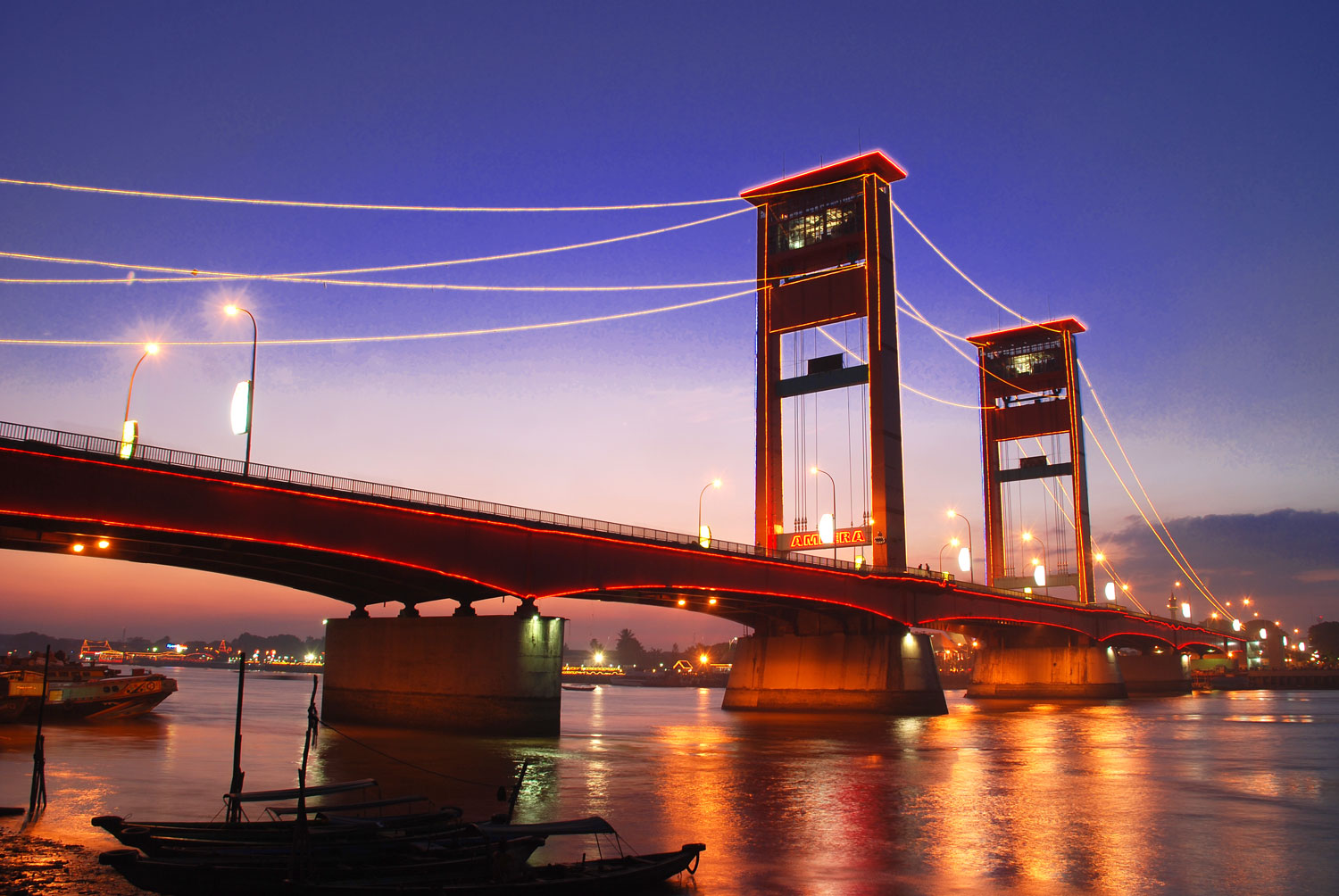
Jembatan Ampera
Jembatan Ampera, sebuah jembatan megah sepanjang 1.177 meter yang melintas di atas Sungai Musi yang menghubungkan daerah Seberang Ulu dan Seberang Ilir ini merupakan ikon Kota Palembang. Jembatan ini dibangun pada tahun 1962 dan dibangun dengan menggunakan harta rampasan Jepang serta tenaga ahli dari Jepang.
Masjid Agung Palembang
Masjid Agung Sultan Mahmud Badaruddin II Palembang, terletak di pusat Kota Palembang, masjid ini merupakan masjid terbesar di Sumatera Selatan dengan kapasitas 15.000 jemaah[8].
Kantor Walikota dilihat dari Benteng Kuto Besak
Benteng Kuto Besak, terletak di tepian Sungai Musi dan berdekatan dengan Jembatan Ampera, Benteng ini merupakan salah satu bangunan peninggalan Kesultanan Palembang Darussalam. Di bagian dalam benteng terdapat kantor kesehatan Kodam II Sriwijaya dan rumah sakit. Benteng ini merupakan satu-satunya benteng di Indonesia yang berdinding batu dan memenuhi syarat perbentengan / pertahanan yang dibangun atas biaya sendiri untuk keperluan pertahanan dari serangan musuh bangsa Eropa dan tidak diberi nama pahlawan Eropa[9].
Kantor Walikota Palembang
Gedung Kantor Walikota, terletak di pusat kota, pada awalnya bangunan ini berfungsi sebagai menara air karena berfungsi untuk mengalirkan air keseluruh kota sehingga juga dikenal juga sebagai Kantor Ledeng. Saat ini gedung ini berfungsi sebagai Kantor Walikota Palembang dan terdapat lampu sorot di puncak gedung yang mempercantik wajah kota di malam hari.
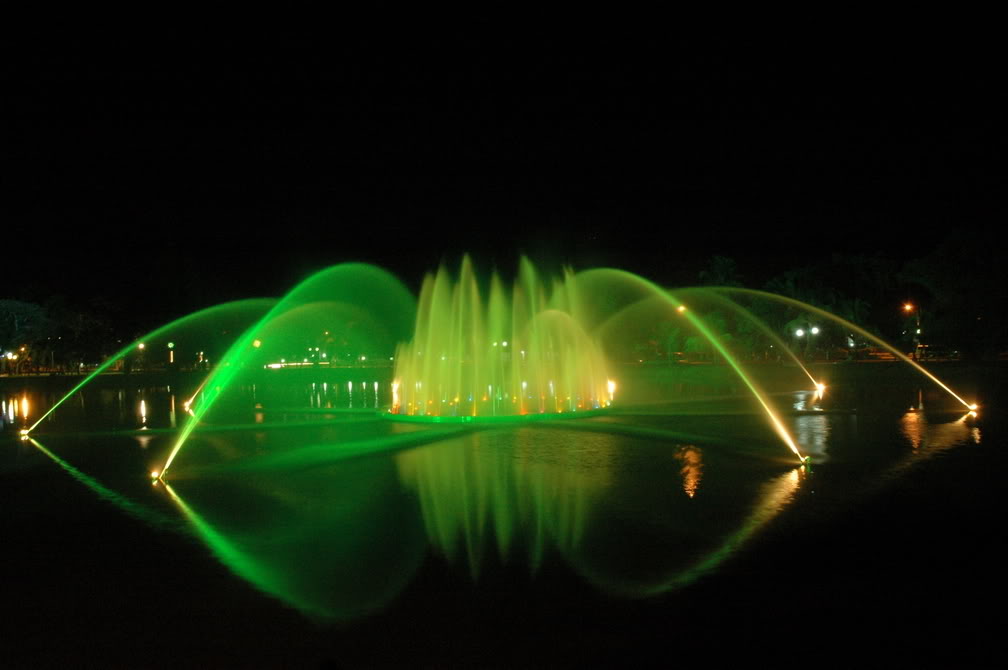
Air Mancur Kambang Iwak
Kambang Iwak Family Park, sebuah danau wisata yang terletak di tengah kota, dekat dengan tempat tinggal walikota Palembang. Di tepian danau ini terdapat banyak arena rekreasi keluarga dan ramai dikunjungi pada hari libur. Selain itu di tengah danau ini terdapat air mancur yang tampak cantik di waktu malam.
Hutan Wisata Punti Kayu
Hutan Wisata Punti Kayu, sebuah hutan wisata kota yang terletak sekitar 7 km dari pusat kota dengan luas 50 ha dan sejak tahun 1998 ditetapkan sebagai hutan lindung. Didalam hutan ini terdapat area rekreasi keluarga dan menjadi tempat hunian sekelompok monyet lokal.
Taman Purbakala Kerajaan Sriwijaya, sebuah site peninggalan Kerajaan Sriwijaya yang terletak di tepian Sungai Musi. Terdapat sebuah prasasti batu peninggalan Kerajaan di area ini.
Taman Purbakala Bukit Siguntang, terletak di perbukitan sebelah barat Kota Palembang. Di tempat ini terdapat banyak peninggalan dan makam - makam kuno Kerajaan Sriwijaya.
Monpera Palembang
Monumen Perjuangan Rakyat, terletak di tengah kota, berdekatan dengan Masjid Agung dan Jembatan Ampera. Sesuai dengan namanya didalam bangunan ini terdapat benda - benda peninggalan sejarah pada masa penjajahan.
Museum Balaputradewa, sebuah museum yang menyimpan banyak benda - benda peninggalan Kerajaan Sriwijaya.
Museum Sultan Mahmud Badaruddin II, terletak di dekat Jembatan Ampera dan Benteng Kuto Besak dan dulunya merupakan salah satu peninggalan Keraton Palembang Darussalam. Didalamnya terdapat banyak benda - benda bersejarah Kota Palembang.
Museum Tekstil, terletak di Jl. Merdeka museum ini menyimpan benda - benda tekstil dari seluruh kawasan di Provinsi Sumatera Selatan.
Banyak sebenarnya yang tidak tahu dimanakah negara terkaya di planet bumi ini, ada yang mengatakan Amerika, ada juga yang mengatakan negera-negara di timur tengah. tidak salah sebenarnya, contohnya amerika. negara super power itu memiliki tingkat kemajuan teknologi yang hanya bisa disaingi segelintir negara, contoh lain lagi adalah negara-negara di timur tengah.Rata-rata negara yang tertutup gurun pasir dan cuaca yang menyengat itu mengandung jutaan barrel minyak yang siap untuk diolah. tapi itu semua belum cukup untuk menyamai negara yang satu ini. bahkan Amerika, Negara-negara timur tengah serta Uni Eropa-pun tak mampu menyamainya.dan inilah negara terkaya di planet bumi yang luput dari perhatian warga bumi lainya. warga negara ini pastilah bangga jika mereka tahu. tapi sayangnya mereka tidak sadar "berdiri di atas berlian" langsung saja kita lihat profil negaranya.Wooww... Apa yang terjadi? apakah penulis (saya) salah? tapi dengan tegas saya nyatakan bahwa negara itulah sebagai negara terkaya di dunia. tapi bukankah negara itu sedang dalam kondisi terpuruk? hutang dimana-mana, kemiskinan, korupsi yang meraja lela, kondisi moral bangsa yang kian menurun serta masalah-masalah lain yang sedang menyelimuti negara itu.baiklah mari kita urai semuanya satu persatu sehingga kita bisa melihat kekayaan negara ini sesungguhnya.
Monumen Nasional terletak di pusat Jakarta, di depan Istana Negara dan dalam area gedung-gedung kantor pemerintahan. Pembangunan menara ini dimulai pada tanggal 17 Agustus 1961 oleh Presiden Soekarno dengan Soedarsono dan Silaban sebagai arsiteknya dalam rangka menunjukkan semangat kemerdekaan bangsa Indonesia, dilambangkan sebagai obor dengan api yang menyala-nyala di atasnya, monumen ini juga melambangkan lingga dan yoni yang merupakan perwujudan kesuburan tanah air Indonesia, atau juga melambangkan alu dan lumpang (penumbuk padi) juga perwujudan kesuburan dan kemakmuran bangsa Indonesia. Pembangunan selesai pada tanggal 12 Juli 1975 pada masa pemerintahan Presiden Soeharto. Tinggi menara ini 137 meter, nyala api yang terbuat dari perunggu seberat 14,5 ton dilapisi emas seberat 35 kilogram, bentuk piringan persegi dibawahnya berukuran lebar 45 X 45 meter dan tinggi 17 meter, dan ruangan Sejarah Nasional di dalamnya mempunyai tinggi langit-langit 8 meter.
Patung Selamat Datang
Patung atau Tugu Selamat Datang di depan Hotel Indonesia ini dibuat dalam rangka persiapan penyelenggaraan ASIAN GAMES ke IV di Jakarta pada tahun 1962. Tujuan pembangunan patung ini adalah untuk menyambut tamu-tamu yang tiba di Jakarta dalam rangka pesta olah raga tersebut. Patung tersebut menggambarkan dua orang pemuda-i yang membawa bunga sebagai penyambutan tamu.
Hotel Indonesia pada waktu itu merupakan pintu gerbang masuk ibukota Jakarta dan juga merupakan pintu gerbang rangkaian kegiatan pertandingan yang diselenggarakan di Istora Senayan. Pada masa itu semua tamu asing yang datang di Jakarta masuk melalui bandara Internasional Kemayoran dan langsung menuju ke hotel Indonesia yang menjadi tempat penginapan bagi mereka, sehingga sebelum mereka memasuki hotel maka mereka akan mendapatkan patung Selamat Datang ini di depannya.
Ide pembuatan patung ini berasal dari Presiden Soekarno dan design awalnya dikerjakan oleh Henk Ngantung yang pada saat itu merupakan wakil Gubernur DKI Jakarta. Patung terbuat dari perunggu. Tinggi patung dari kepala sampai kaki 5 meter. Sedangkan tinggi seluruhnya dari kaki hingga tangan yang melambai adalah 7 meter. Sementara tinggi voetstuk atau kaki patung adalah 10 meter dikerjakan oleh PN. Pembangunan Perumahan. Pelaksana pembuatan patung adalah team pematung Keluarga Arca pimpinan Edhi Sunarso di Karangwuni. Pada saat pembuatan presiden Soekarno didampingi Duta Besar Amerika pada saat itu Mr. Jones beserta para menteri sempat berkunjung ke sanggar Edhi Sunarso. Pembuatan patung ini memakan waktu sekitar satu tahun. Diresmikan oleh Bung Karno pada tahun 1962.
Patung Dirgantara
Patung ini menghadap ke Utara dengan tangannya mengacung ke bekas Bandar Udara Internasional Kemayoran, lokasinya dekat dengan Markas Besar Angkatan Udara di Selatannya dan Bandar Udara Domestik Halim Perdana Kusuma di Tenggaranya.
Melambangkan kekuatan angkatan udara Indonesia, dengan bentuk patung manusia yang kuat dan berani terbang menjelajah angkasa.
Presiden Soekarno ingin menunjukkan pada dunia bahwa Indonesia sebagai negara kepulauan dilindungi oleh angkatan udara yang kuat dan dilayani oleh transportasi udara yang solid sebagai sarana perpindahan manusia.
Bertempat di kawasan Pancoran dan juga disebut sebagai Patung Pancoran, patungnya memiliki tinggi 11 meter terbuat dari 11 ton perunggu, dengan landasan berbentuk lengkungan dari beton setinggi 27 meter. Dirancang oleh Edhi Sunarso, dibuat oleh seniman Keluarga Arca dari Yogyakarta, dan diawasi langsung oleh Presiden Soekarno sendiri, patung ini selesai dibangun dalam dua tahun (1964-1965). Ada gosip yang mengatakan bahwa Presiden Soekarno harus menjual mobilnya untuk membiayai pembuatan patung ini. Sayangnya sekarang monumen ini tertutupi oleh jalan layang dan jalan tol.
Patung Pahlawan atau Tugu Tani
Nama resmi dari patung ini adalah Patung Pahlawan, tetapi karena bentuk dari figur lelaki yang memakai topi caping seperti yang sering dipakai oleh petani maka patung ini disebut Patung Pak Tani. Patung ini dibuat untuk memberi penghargaan pada para pejuang kemerdekaan Indonesia, dilambangkan dengan seorang lelaki memakai caping dan menyandang senapan sedang meminta restu pada wanita yang ada disisinya untuk maju ke medan perang. Cerita asal muasal patung ini dimulai ketika Presiden Soekarno berkunjung ke Moskow dan disana beliau terkesan pada patung-patung yang ada di ibukota Rusia tersebut, sehingga Presiden Rusia pada saat itu mengenalkan Presiden Soekarno pada seniman pembuat dari patung-patung tersebut, Matvei Manizer dan anaknya Otto Manizer. Yang kemudian diundang untuk datang ke Jakarta untuk membuat patung yang melambangkan semangat kemerdekaan, kemudian kedua pematung ini berkelana ke daerah-daerah pedesaan di Indonesia dan menemukan sebuah legenda Jawa Barat yang menceritakan seorang Ibu yang mengiringi anaknya untuk pergi ke medan perang, sang Ibu memberikan semangat supaya kuat tekadnya untuk memenangkan setiap peperangan, serta selalu ingat kepada orang tua dan negaranya.
Patung perunggu ini dibuat di Rusia dan dibawa ke Indonesia menggunakan kapal laut, diresmikan pada tahun 1963 oleh Presiden Soekarno. Pada papan di monumen ini tertulis "Bangsa yang menghargai pahlawannya adalah bangsa yang besar"
Patung Pembebasan Irian Barat
Patung perunggu ini dibuat untuk memperingati kebebasan Irian Barat atau Irian Jaya yang sekarang disebut
Patung terbuat dari perunggu dengan berat kurang lebih 8 ton.
Tinggi patung dari kaki sampai kepala 9 meter, tinggi keseluruhan sampai ujung tangan kurang lebih 11 meter.
Tinggi kaki patung (voetstuk) 20 meter terhitung dari jembatan, sedangkan dari landasan bawah 25 meter.
Pelaksana PN Hutama Karya dengan arsitek Silaban.
Pelaksana pematung: Team pematung Keluarga Arca Yogyakarta.
Lama pembuatan kurang lebih 1 tahun
Diresmikan pada tanggal 17 Agustus 1963 oleh Bung Karno. Ide pembuatan patung berasal dari Bung Karno, kemudian “diterjemahkan” oleh Henk Ngantung dalam bentuk sketsa. Ide tersebut tercetus dari pidato Bung Karno di Yogyakarta. Pidato Bung Karno telah menggerakkan massa untuk bertekad membebaskan saudara-saudaranya di Irian Barat dari belenggu penjajahan Belanda.
Berlokasi di Lapangan Banteng dekat Hotel Borobudur dan Gedung Departemen Keuangan, daerah ini dulunya dipakai untuk terminal bus, tetapi sekarang dipakai untuk tempat budi daya dan pameran tanaman.
Patung Pemuda Membangun
Patung ini dibuat sebagai penghargaan untuk para pemuda dan pemudi dalam keikut sertaannya pada pembangunan Indonesia, dilambangkan dengan seorang pemuda kuat yang memegang piring berisi api yang tak pernah padam sebagai perwujudan semangat pembangunan yang tak pernah mati. Patung ini terbuat dari beton bertulang yang dilapisi oleh teraso, mulai dibangun pada bulan Juli 1971 oleh tim gabungan Insinyur, Seniman dan Arsitek (Biro IBA) dengan Imam Supardi sebagai pimpinan tim dan Munir Pamuncak sebagai penanggungjawab pelaksana, direncanakan untuk diremikan pada Hari Sumpah Pemuda tanggal 28 Oktober 1971, tetapi karena pembangunan belum selesai maka diresmikan pada bulan Maret 1972. Patung ini terletak pada Bundaran Senayan, tempat strategis sebagai titik temu antara Senayan sebagai pintu gerbang Jakarta Pusat dengan area Jakarta Selatan .
Patung Arjuna Wijaya / Asta Brata ( Patung Kuda Setan)
Patung Arjuna Wijaya yang dibangun Agustus 1987 ini ngegambarin Arjuna dalam perang Baratayudha yang kereta perangnya ’disetirin’ sama Batara Kresna. Adegan patung karya pematung Nyoman Nuarta itu diambil dari fragmen waktu mereka melawan Adipati Karna. Kereta itu ditarik delapan kuda, yang melambangkan delapan ajaran kehidupan yang diidolai oleh Presiden Soeharto. Asta Brata itu meliputi falsafah bahwa hidup harus mencontoh bumi, matahari, api, bintang, samudra, angin, hujan dan bulan. Di bagian patung itu nempel prasasti yang bertuliskan "Kuhantarkan kau melanjutkan perjuangan dengan pembangunan yang tidak mengenal akhir."
Pada waktu pembuatannya, karena keterbatasan dana, akhirnya patung itu dibuat dari bahan poliester resin yang punya kelemahan mudah rapuh jika terkena sinar ultraviolet. Emang kebukti kok kalu patung ini mulai keropos, sampe akhirnya tahun 2003, patung ini direnovasi dengan menelan biaya 4M (4 miliar, bukan 4 meter‼) dan material patungnya diganti dengan bahan tembaga.
karena kesibukan saya jadi jarang menghadirkan tulisan, cerita dan posting posting terbaru, minggu ini akan saya hadirkan posting copas yang menarik sebagai hidangan pembuka, karena saya jg sedang menulis mengenai pengalaman hidup dan karier. semoga bisa cepat rampung.